
Tick Resistance
Bulls from Montpellier and Bellevue Herds are genuinely adapted animals, raised under real conditions: in tick country and are not treated for ticks: no spraying, no dipping, no fly tags.
Immunity requires exposure
If you are looking to buy bulls which are tick resistance, it is important to select bulls which have been subjected to ticks, as immunity to ticks requires exposure to ticks. In the absence of tick challenges, i.e. in a tick free environment, bulls could look magnificent and be extensively used. Bulls with high genetic merit for certain production traits could have very poor tick resistance. Selecting Belmont Red bulls on phenotype, in a tick free environment, does not guarantee tick resistance. Not treating for ticks in a tick free environment does not guarantee tick resistance.
Although the mechanism is not controlled by a single genetic trait (1) (It is believed there may be 100’s to 1000’s of genes involved (1)), tick resistance is moderately to highly heritable (1). The use of such bulls i.e. bulls that are selected only on phenotype in a tick-free environment will result in fairly rapid genetic regression towards susceptibility. This applies to all other adaptive traits as well.
The tick line
This has been very topical: there have been some outbreaks of ticks into tick free areas (QCL Feb 12th and 19th , 2026). This will invariably happen again if we have another outstanding wet period, as cattle ticks tend to be in the higher rainfall areas (1). If you have a bull which is tick resistant, and has been exposed to ticks, you do not have to worry as much.
Cost advantage
Already in 1973 the cost of cattle tick in Australia was estimated to be $42 million (2) and has now been estimated to be a staggering $146 million (3). At an individual level, cattle pour-ons, and treatments are extremely expensive. Fifteen litres of tick pour on costs $ 1805.00 and the effect lasts for 12 weeks !
A drum of Natural animal resistant has the biggest economic impact on tick control ‘(1)pg 1, and “breeding for more resistant animals via tropical animal selection..provides a low cost, permanent solution to ticks” (1) pg 1. It is less expensive to use breeds which are suited to the environment in which they are being used (1).
Tick resistance & growth
Indications from research at Belmont showed that high growth weight is geneticaly related to high ticket resistance(2) . This simplifies selection for tick resistance (2) Further more, by extension, an animal at 600 days, who thrived in a tick environment with no tick treatment, is obviously able to handle ticks and internal parasites, and has not had these parasites affect their growth.
References:
1) “ Cattle Breeding for Tick Resistance” https:tickboss.com.au (2022)
2) “The genetic Approach to Tick Control”, Dr GW Seifert, CSIRO 1973.
3) MLA 2026
A Picture Speaks A Thousand Words
Same day and exactly the same conditions and environment

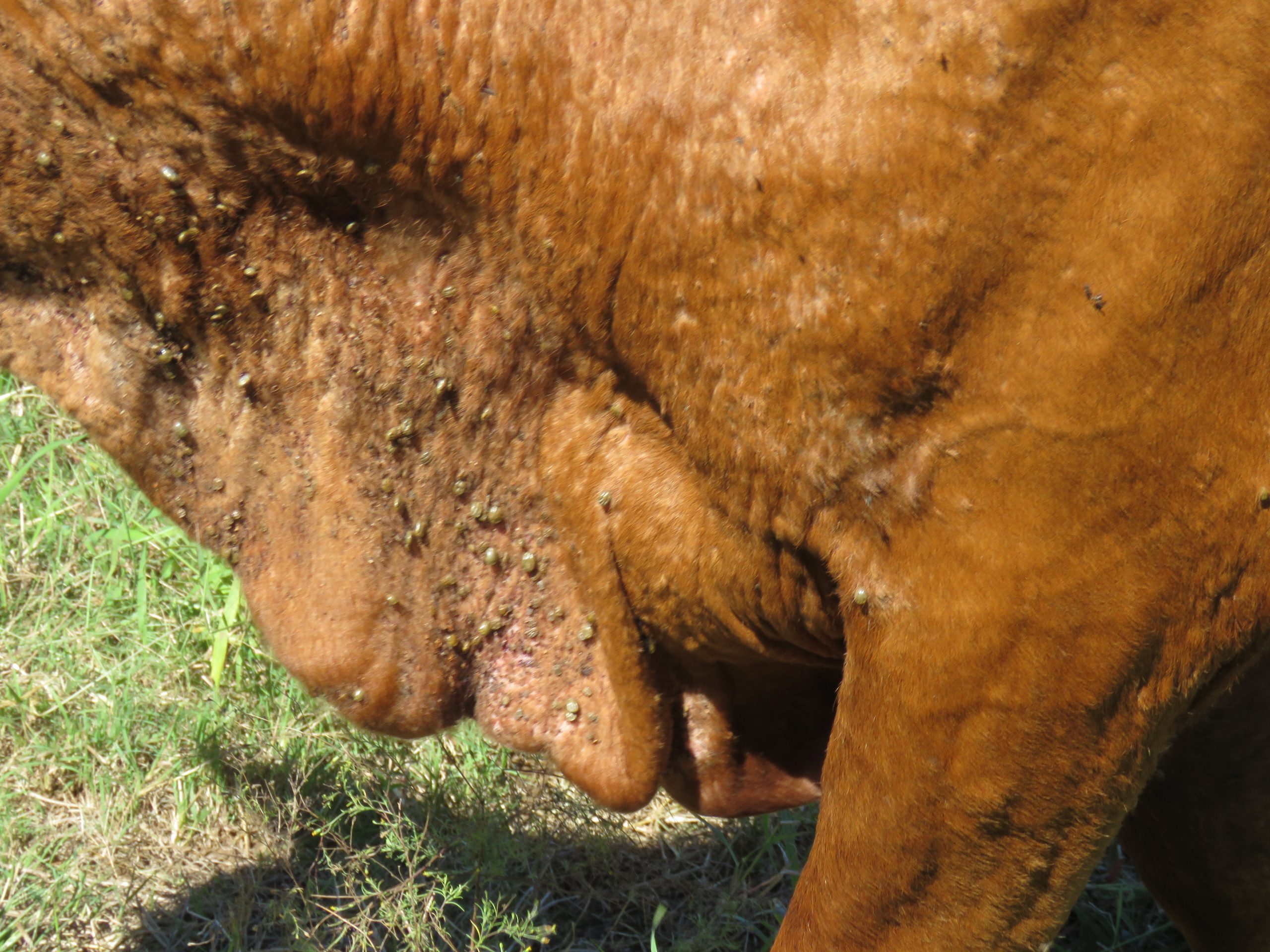
European breed
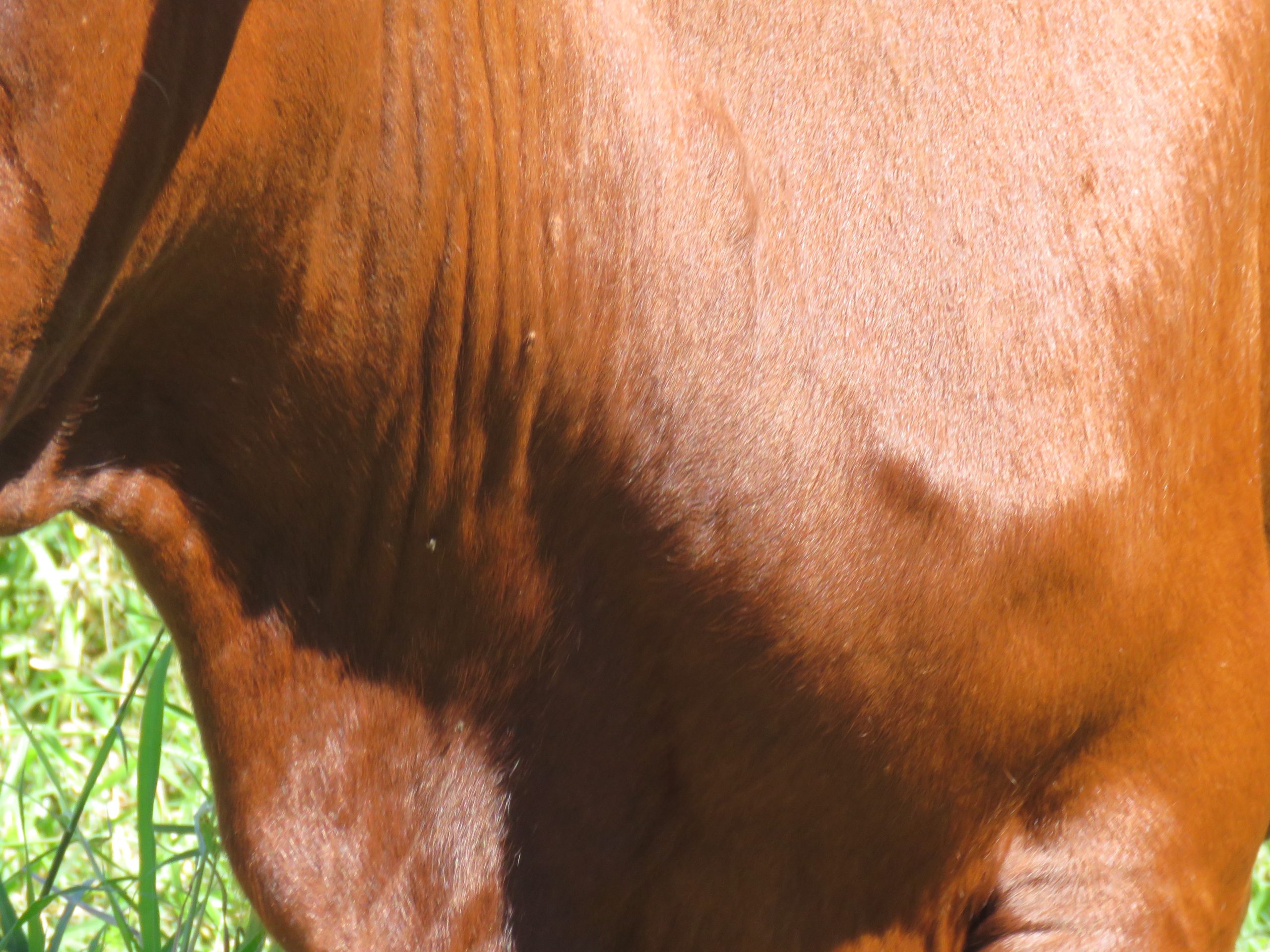
Belmont Red